
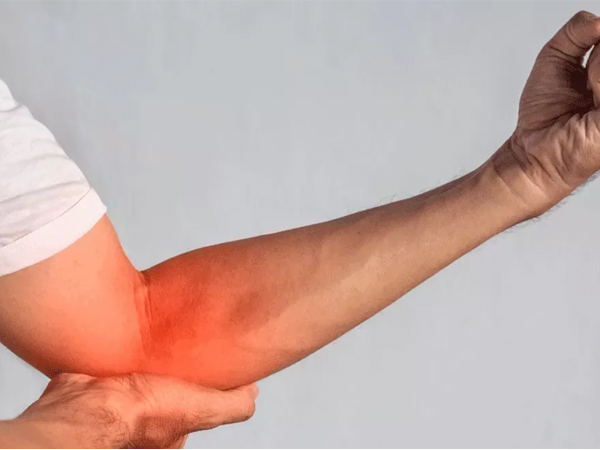
Understanding Cubital Tunnel Syndrome
Cubital tunnel syndrome is the second most common peripheral nerve compression neuropathy in the upper extremity (after carpal tunnel syndrome). It occurs when the ulnar nerve—often referred to as the "funny bone" nerve—becomes compressed, stretched, or irritated as it passes through the cubital tunnel on the inside of the elbow.
The ulnar nerve supplies feeling to the little finger and the outer half of the ring finger, and controls the delicate intrinsic muscles in the hand responsible for fine pinch, grip, and finger coordination. Prolonged compression can cause permanent sensory loss and irreversible muscle wasting (claw hand deformity).
Primary Causes & Risk Factors
- Repetitive elbow bending: Bending the elbow stretches the ulnar nerve around the medial epicondyle and narrows tunnel volume by over 50%.
- Prolonged elbow leaning: Chronic direct pressure on the inner elbow on office desks, armrests, or while driving.
- Sleeping with fully flexed elbows: Tucking arms tightly beneath the chest or pillow during night sleep.
- Bone spurs or arthritis: Osteophytes around the elbow joint compressing the fibro-osseous tunnel.
- Ulnar nerve subluxation: Congenital snapping of the nerve back and forth over the medial epicondyle.
Characteristic Signs & Symptoms
Numbness in Ring & Pinky
Persistent tingling ("pins and needles") or numbness localized strictly to the small and ring fingers.
Nocturnal Awakenings
Waking up in the middle of the night with a totally "dead", numb, or burning hand requiring shaking to relieve.
Weak Grip & Dropping Items
Loss of pinching power; difficulty opening jars, turning keys, typing, or playing musical instruments.
First Web Space Wasting
Visible hollowing/atrophy between thumb and index finger (adductor pollicis muscle atrophy).
Diagnostic Workup
Diagnosis begins with targeted clinical provocation tests conducted by Dr. Gawai:
- Tinel’s Sign: Tapping directly over the ulnar nerve behind the elbow reproduces sharp electric tingles down into the little finger.
- Elbow Flexion Test: Sustained full flexion of the elbow for 60 seconds provokes numbness and paresthesias.
- Froment's Sign: Tests weakness of adductor pollicis during paper pinch testing.
- EMG / Nerve Conduction Velocity (NCV): Quantifies conduction velocity across the elbow segment, distinguishing mild from severe axon loss.
- High-Resolution Ultrasound: Visualizes nerve cross-sectional area swelling, fascicular architecture, and dynamic subluxation.
Treatment Options
Frequently Asked Questions
What is the difference between In-Situ Decompression and Transposition?
In-situ decompression releases the roof of the cubital tunnel while leaving the nerve in its anatomical bed. Transposition (moving the nerve anteriorly beneath muscle) is reserved for cases where the nerve snaps over the bone or in revision surgeries.
Can lost hand muscle strength return after surgery?
Numbness typically improves very quickly once pressure is relieved. If muscle wasting has existed for months or years, surgery halts further deterioration, and motor strength gradually regenerates over 6 to 12 months with physical therapy.