Understanding Shoulder Dislocation & Chronic Instability
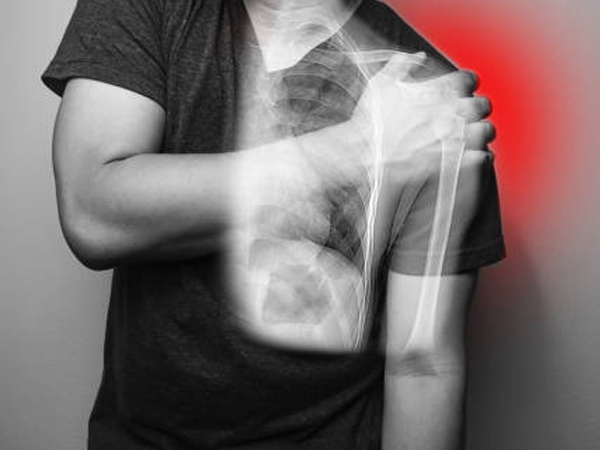
The shoulder joint (glenohumeral joint) is a ball-and-socket mechanism engineered for supreme mobility. However, because the socket (glenoid) is very shallow—often compared to a golf ball sitting on a tee—it relies heavily on the soft tissue rim known as the glenoid labrum and capsular ligaments for stability.
When a traumatic high-energy dislocation occurs, the anterior labrum often tears away from the glenoid bone. This is medically termed a Bankart lesion. Without anatomic surgical re-attachment, patients below 30 years face an over 80% likelihood of recurring dislocations during simple daily activities or sleep.
Associated Pathologies in Shoulder Instability
- Bankart Lesion: Detachment of the anteroinferior labrum from the glenoid rim.
- Hill-Sachs Lesion: An impaction bone dent on the posterolateral humeral head caused by collision with the glenoid rim during dislocation.
- Bony Bankart: Fracture and erosion of the anterior glenoid bone shelf.
- SLAP Tears: Superior Labrum Anterior to Posterior tears commonly observed in overhead throwing athletes.
Signs & Symptoms of Recurrent Shoulder Instability
Sudden Popping Out
The ball of the shoulder visibly slipping or popping out of its socket accompanied by severe spasms.
Apprehension Feeling
Constant intense apprehension or hesitation when lifting the arm up and backward (overhead positions).
"Dead Arm" Syndrome
Transient numbness, burning pain, or tingling radiating down the arm after sudden subluxation episodes.
Loss of Overhead Power
Severe weakness during swimming, throwing cricket balls, badminton smashes, or gym overhead presses.
Diagnostic Protocol
Accurate surgical planning requires measuring any bone loss on both the glenoid and humeral head:
- High-Resolution MRI / MR-Arthrogram: Evaluates the labrum, capsular redundancy, and rotator cuff integrity.
- 3D CT Scan with Digital Subtraction: Accurately calculates glenoid bone loss percentage. If bone loss exceeds 15-20%, an open bone transfer (Latarjet) is indicated over simple soft-tissue repair.
Treatment Modalities
Why Choose Dr. Yajuvendra Gawai for Shoulder Surgery?
- US Fellowship Training: Fellowship at SUNY Buffalo & NYU Hospital for Joint Diseases handling NFL/NHL collision athletes.
- Bipolar Bone Loss Expertise: Comprehensive on-track/off-track biomechanical assessments to prevent surgical failure.
- Knotless Bio-Composite Anchors: Eliminates abrasive suture knots inside the joint, safeguarding pristine articular cartilage.
Frequently Asked Questions
What is the difference between Bankart Repair and Latarjet Surgery?
Bankart repair re-attaches the soft-tissue labrum using anchors and is ideal when there is little to no bone loss. Latarjet is a bone block procedure (coracoid process transfer) used for contact athletes or patients with significant glenoid bone loss (>15%).
How long must I wear a shoulder sling post-surgery?
Patients wear an abduction shoulder immobilizer sling for approximately 3 to 4 weeks while the repaired labrum securely binds to the bone surface.