
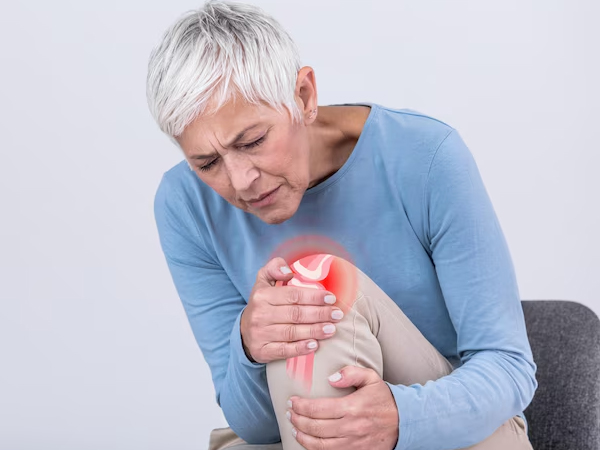
What is Septic Arthritis?
Septic arthritis (infectious arthritis) is a severe, rapidly progressive infection within the synovial cavity of a joint, most commonly affecting the knee, hip, shoulder, or ankle. It is caused by bacterial colonization—most frequently Staphylococcus aureus, Streptococcus, or Gram-negative bacilli.
Bacterial enzymes and intense host proteolytic activity can destroy hyaline articular cartilage within 24 to 48 hours. Immediate medical evaluation and prompt joint decompression are imperative to prevent irreversible joint destruction.
How Bacteria Infiltrate the Joint Space
- Hematogenous spread: Bacteria travel through the bloodstream from a distant infection (e.g., skin boil, urinary tract infection, pneumonia) into the highly vascularized synovial lining.
- Direct inoculation: Penetrating trauma, animal or thorn bites, surgical puncture, or intra-articular injections without strict aseptic technique.
- Contiguous spread: Extension from adjacent osteomyelitis, bone abscess, or soft-tissue cellulitis.
Critical Signs & Symptoms
High Fever & Chills
Acute systemic onset of high fever accompanied by rigors, malaise, and elevated inflammatory markers.
Intense Local Erythema
The affected joint becomes fiery red, hot to the touch, and massively distended with synovial fluid.
Total Inability to Move
Pseudoparalysis—even passive movement by 1 or 2 degrees produces agonizing, intolerable pain.
Complete Weight-Bearing Failure
Patients cannot bear even minimal body weight on the leg or hold objects with the arm.
Urgent Diagnostic Pathway
When septic arthritis is suspected, time is cartilage:
- Synovial Arthrocentesis (Aspiration): Needle fluid draw sent immediately for Gram stain, cell count (WBC >50,000/µL with >90% PMNs), crystal analysis to rule out gout, and bacterial culture with antibiotic sensitivity testing.
- Blood Investigations: CRP (C-Reactive Protein), ESR, Complete Blood Count, and blood cultures taken before commencing antibiotics.
- Imaging: Plain radiographs to rule out osteomyelitis; ultrasound or MRI to assess capsular distension and deep abscess pockets.
Dr. Gawai's Treatment Protocol
Frequently Asked Questions
Can antibiotics alone cure septic arthritis without surgery?
Antibiotics struggle to penetrate thick purulent fluid and fibrinous membranes inside a high-pressure joint capsule. Without mechanical decompression and lavage, bacterial toxins quickly liquefy cartilage. Evacuation is almost always critical.
Who is at higher risk for septic arthritis?
Individuals with uncontrolled diabetes, rheumatoid arthritis, immunosuppression, prosthetic joint implants, intravenous drug users, and elderly patients have significantly higher susceptibility.