
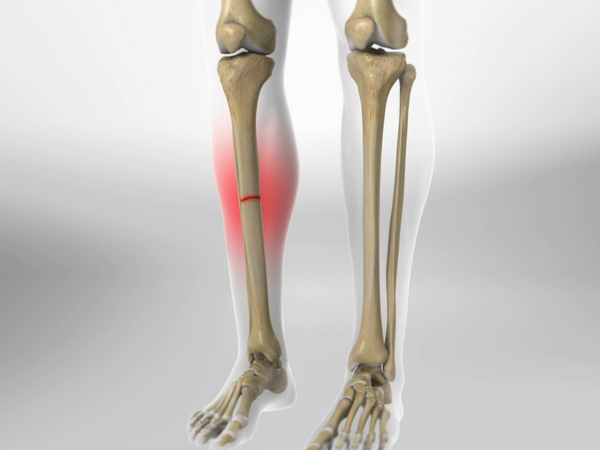
Understanding Tibia (Shin Bone) Fractures
The tibia is the larger and stronger of the two lower leg bones, carrying approximately 85% of total body weight. Because the tibia's anterior medial border sits immediately beneath the skin without a thick overlying muscle layer, it is the most commonly fractured long bone in the human body and possesses an increased vulnerability to open fractures and delayed bone healing.
Whether sustained during high-speed road traffic accidents, competitive football tackles, falls from height, or osteoporosis in older adults, tibia fractures require precise mechanical realignment to prevent malunion, leg length discrepancies, and post-traumatic knee or ankle arthritis.
Anatomical Classification of Tibial Fractures
- Tibial Plateau Fractures: Involves the upper intra-articular surface bearing the knee joint cartilage. Precise joint congruity restoration is critical to prevent osteoarthritis.
- Tibial Shaft Fractures: Mid-bone diaphyseal breaks (transverse, spiral, comminuted, or segmental).
- Tibial Pilon Fractures: High-impact crush injuries to the distal weight-bearing roof of the ankle joint.
- Open (Compound) Fractures: Bone penetrates the cutaneous barrier, demanding emergent debridement and stabilization.
Key Symptoms & Clinical Presentation
Severe Inability to Walk
Immediate, absolute inability to support body weight on the injured lower extremity.
Visible Deformity
Obvious leg angling, rotation, limb shortening, or skin tenting over bone fragments.
Extensive Swelling & Blistering
Rapid compartment swelling, bruising (ecchymosis), and potential development of fracture blisters.
Risk of Compartment Syndrome
Severe out-of-proportion pain, tense calf muscles, and numbness in toes requiring emergency fascial evaluation.
Dr. Gawai’s Evidence-Based Surgical Protocols
Why Seek Tibial Care at Dr. Gawai's Practice?
- AO Trauma International Expertise: Rigorous adherence to AO principles of biological fracture care and atraumatic handling of soft tissues.
- Affiliated Premier Centers: 24x7 surgical availability at Nanavati Max Super Speciality & Criticare Asia Hospitals.
- Non-Union & Mal-Union Revision: Specialized expertise in salvaging old unhealed fractures with bone grafting and re-alignment osteotomies.
Frequently Asked Questions
How soon after tibia nailing can I put weight on my leg?
Depending on the fracture pattern and bone stability achieved, partial weight-bearing with a walker or crutches is frequently encouraged within the first 48 to 72 hours, stimulating osteoblastic healing.
Does the tibia nail need to be removed later?
In most patients, the intramedullary nail is inert titanium and can safely remain permanently. If anterior knee pain occurs when kneeling, it may be removed after complete bone consolidation (typically 1.5 to 2 years post-surgery).